Three Countries, Three Violences, One Fear
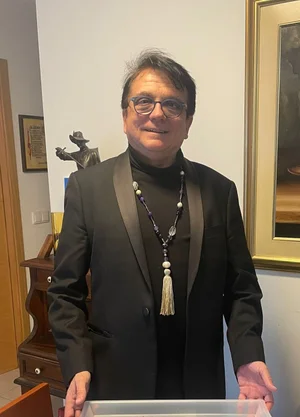
By: Angel Antonio
I felt that terrorism and economic crisis were chasing me.
In 2004 I sent my brother to Spain to open a business, looking for a more stable place. He had barely arrived when the trains in Madrid exploded.
I have lived in three countries. In Colombia I feared bombs and kidnappings. In the United States, the neighbor with a gun. In Spain, what you don’t see coming.
Three countries, three violences, one fear.
Colombia: the fear of being the target
In Colombia I lived with the fear of bombs. The assassination of Luis Carlos Galán in 1989. The bomb at Calle 93 and Carrera 15 in 1993, when my sister and her then boyfriend were nearby. The Pablo Escobar years, when we lived afraid that a bomb would go off. Some of us in my family were close to a few of them. Nothing happened to us.
That fear was enormous, but it was indiscriminate. The bomb was aimed at all of society. It didn’t have my name on it.
A few years later came the Caguán, the so-called peace process with the FARC, and with it a terrible rise in kidnappings. For me it was the worst period of my life, worse even than the Escobar years.
The FARC declared war on anyone who generated wealth. They kidnapped and extorted large and small business owners, large landowners and small producers, merchants. My family and I were well-known entrepreneurs. We were exactly the kind of target the kidnapping gangs were looking for.
In briefings given by the then-DAS, we were taught the so-called triangle of death. We all frequent three places: home, the office, and a third, such as a church, a club or a gym. They wait for you at the entrance of one of them, or of all three. The recipe was to change routes and schedules, in a Bogotá of monumental traffic jams and little infrastructure, where companies, gyms and churches keep fixed hours. The most absurd measure was keeping two or three houses so that nobody would ever know which one you were going to. We all knew these measures were useless.
And the hardest part: it wasn’t about me. Sometimes they don’t even want to take the person who pays. They take a child or a loved one, who has the schedule of their school or university and a home where they live.
At the same time, Colombia’s economy was collapsing, and our family company, mid-sized, built from scratch and without capital, was sinking faster than we could react. Violence doesn’t only kill. It also punishes those who create jobs and wealth.
What sustains this violence?
Drug trafficking is the gasoline, not the fire. The fires run deeper. Since independence, Latin American countries fell into backwardness and dependence: first on England, then on the United States, and now China is coming our way. Without opportunities for growth, people look for exits. Some emigrate. Others start businesses. Others do what Colombians call rebusque, hustling in the informal economy. And others take the path of crime: drug trafficking, extortion, kidnapping, plain robbery.
The lack of opportunity doesn’t explain everything, but without it violence always finds someone to recruit.
The numbers tell part of the story. According to the UN and the Colombian government, there were 261,000 hectares of coca in 2024, a record [1]. The homicide rate, however, fell from a peak of close to 80 per 100,000 inhabitants in 1991 [2] to around 26 in 2025 [3]. Much lower, but still a lot.
What I propose
There is no single measure. Regulating drugs instead of prohibiting them is one part, as I argued in my earlier articles on the coca leaf and cannabis. It removes fuel, though it doesn’t put out the fire.
Another part is for Latin America to unite to change its opportunities for economic growth. Today only 19.2% of Latin American exports go to another country in the region, compared with 59.1% in the European Union (ECLAC, 2013) [4]. By 2020 that share had dropped to 12% [5].
And we need education in ethics and values, for the young and also for older people, who must be offered economic opportunities and personal growth.
United States: the fear of the neighbor
In the United States I lived very peacefully. Until, in 1995, my Japanese roommate received a letter from his embassy, warning students about the dangers of approaching the doors of houses. It cited a case.
It was the case of Yoshihiro Hattori. In 1992, a 16-year-old Japanese exchange student in Baton Rouge, Louisiana, was on his way to a Halloween party and knocked on the wrong door by mistake. The homeowner shouted “freeze.” Yoshi, who barely spoke English, didn’t understand the word, kept walking toward him and was shot. A jury acquitted the homeowner [6].
That is how my roommate told it to me, and I later checked the facts. That is when I woke up from the idea that I lived in a safe and peaceful place.
This week, at an elementary school in Bend, Oregon, a 16-year-old killed three children and a teacher. A member of the community shot him dead [7]. Since Columbine, these tragedies keep happening. The victims are the tragedy, and the death of the shooter, at only 16, is one too.
The argument of those who defend open carry is that someone intervened. But that same open carry is what makes it easy for anyone to get a gun. In 2020, according to the CDC, firearms became the leading cause of death for children and adolescents in the United States, ahead of traffic accidents, and almost 30% of those deaths were suicides [8].
What links Hattori, a traffic argument and a child who finds a gun at home is the same thing: without the gun they would be a scare, an insult or a punch. With it, they are an irreversible death. Having the gun within reach catapults the odds of a tragic outcome.
I understand that US police kill many more people than European police. I have no proof, but I suspect part of the explanation is fear: the officer starts from the assumption that anyone could be armed. In Europe that fear exists too, but less.
What I propose
As with drugs, I favor allowing guns under strong regulation. Those who own or carry guns should be evaluated and inspected at least once a year. There should be a license with training and safe storage. And anyone who wants a gun should justify their particular need: they live in a remote area, their job involves risks, the police are far away. Something that explains why they need a gun and not a panic button.
I know this clashes with the Constitution. But constitutions are legal frameworks, and they can be amended. This is a long-term vision. To collect the guns that already exist, incentives and penalties. And the new legislation should be more open to less favored communities.
A country that pays for distant wars can pay for whatever control laws cost. The question is why money appears for some priorities and not for others.
The United States has no single or simple solution. But we have to start walking the road.
Spain: the fear of what you can’t see
I used to come to Spain on vacation in the 1980s and 1990s, and it was a very safe country. I never heard about gender violence. Perhaps it existed and was not made public. Today it seems to be everywhere. I don’t see it in my daily life: I see it in the news.
Official figures say that in 2025, 46 women were killed by their partners or ex-partners, the lowest number since records began in 2003, and 1,341 since then [9]. In more than 78% of the 2025 cases there had been no prior report [10]. It is the closed door: it happens inside the home and cannot be seen.
Sometimes I find it hard to see some cases as machismo, such as the elderly man who kills his wife and then takes his own life. The official statistics count every woman killed by her partner or ex-partner [11], and experts disagree about cases like these. I distinguish love from hatred. It is a complex debate and I don’t pretend to close it here.
Something similar happens, according to what is seen in the news and on social media, with violence against women within the Muslim community. Also behind closed doors. I only know what the press reports, so I won’t go further. What concerns me is that there are women, from any community, with no way to ask for help.
And there is jihadist terrorism. It happens rarely, but it generates great fear. The March 11, 2004 attacks in Madrid left 193 dead and almost 2,000 injured [12]. I lived it from Colombia, with my brother just arrived in Madrid. Later came Barcelona in 2017, and attacks in France, the United Kingdom and other countries. I think France and the United Kingdom have suffered more, but I don’t know for certain, or why.
What I do know is that the attacks changed. They used to be organized groups with bombs. Since 2014, almost all are individuals with guns, knives or vehicles [13]. There is no organization to dismantle. It could be anyone. It is the same fear I felt in the United States.
Then came the financial and construction crisis of 2008, very similar to the one Colombia lived through in 1999. We tried to make a company work in Spain from 2004 to 2010. There were no fat years for me.
What unites the three stories
Different causes, different violences, the same fear. And the same people always suffer: ordinary people, children, women, those who create jobs. Each violence has its own causes, which is why no single recipe works for all three.
But some values are common. Life is sacred. Property is respected, because it is the basis of development. The family is the cell of society, the one that protects and not the one that conceals. Unity makes strength. Traditional values within liberal democracy.
I cannot create a better world. But I can write, propose, convene and inspire. And I believe the road has three steps: raise, plan and convene. Raise the problems without euphemisms. Plan realistic stages. Convene citizens, lawmakers, communities and the media.
It is a long-term vision, like the union of Latin America. Precisely because it is a long road, we have to start walking it.
Which fear has marked your life, and what would you be willing to do so that the next generation doesn’t live it?
Sources
Blu Radio, “Cultivos de coca en Colombia siguen creciendo: 2024 cerró con 261.000 hectáreas” (bluradio.com/nacion/cultivos-de-coca-en-colombia-siguen-creciendo-2024-cerro-con-261-000-hectareas-rg10). Also Radio Nacional de Colombia, “Informe de cultivos de coca 2024” (radionacional.co/actualidad/informe-cultivos-de-coca-2024).
RTVC Noticias, “Del gobierno de César Gaviria al de Gustavo Petro se registra una caída histórica en la tasa de homicidios en Colombia” (rtvcnoticias.com/caida-historica-tasa-homicidios-colombia-petro).
El Tiempo, “En 2025 se perdió la lucha contra el homicidio en Colombia: en promedio hubo un caso cada 38 minutos” (eltiempo.com/justicia/conflicto-y-narcotrafico/en-2025-se-perdio-la-lucha-contra-el-homicidio-en-colombia-en-promedio-hubo-un-caso-cada-38-minutos-3525299).
ECLAC (CEPAL), infographic on intra-regional trade (cepal.org/sites/default/files/infographic/files/cepal_espanol_comercio.pdf).
Expreso (Ecuador), “Comercio exterior de América Latina cae; repunte de China” (2020) (expreso.ec/actualidad/economia/comercio-exterior-america-latina-cae-repunte-china-2020-97444.html).
“Killing of Yoshihiro Hattori,” Wikipedia (en.wikipedia.org/wiki/Killing_of_Yoshihiro_Hattori); UPI, May 23, 1993, “Rodney Peairs found innocent in exchange student shooting case” (upi.com/Archives/1993/05/23/Rodney-Peairs-found-innocent-in-exchange-student-shooting-case/5379738129600/); UPI, June 12, 1993, “Japan warns its US-bound students: ‘Freeze’ means stop” (upi.com/Archives/1993/06/12/Japen-warns-its-US-bound-students-freeze-means-stop/6474739857600/).
CNN, Oct. 15, 2026, “Oregon school active shooter” (cnn.com/2026/10/15/us/oregon-school-active-shooter); The Spokesman-Review, Oct. 15, 2026, “Teen gunman kills three children, adult at Oregon elementary school” (spokesman.com/stories/2026/oct/15/teen-gunman-kills-three-children-adult-at-oregon-e/).
Michigan Today, “Firearms are now the top cause of death among U.S. youth” (michigantoday.umich.edu/2022/05/20/firearms-are-now-the-top-cause-of-death-among-u-s-youth); KTVU, “Guns were the leading cause of death among teenagers, children in 2020, CDC analysis shows” (ktvu.com/news/guns-were-the-leading-cause-of-death-among-teenagers-children-in-2020); Jordan News, “Guns are now the leading cause of death for American children” (jordannews.jo/Section-111/All/Guns-are-now-the-leading-cause-of-death-for-American-children-17247).
RTVC, “2025 deja al menos 46 mujeres y 3 menores asesinados en España por violencia de género” (rtvc.es/2025-deja-46-mujeres-3-menores-asesinados-espana-violencia-genero-27-diciembre-2025/); Vivir Ediciones, “46 mujeres asesinadas por violencia de género en 2025, la cifra más baja de la estadística” (vivirediciones.es/vivir-ultima-hora/46-mujeres-asesinadas-por-violencia-de-genero-en-2025-la-cifra-mas-baja-de-la-estadistica/).
RTVC (same article as 9); see also Delegación del Gobierno contra la Violencia de Género, fatal victims statistics (violenciagenero.igualdad.gob.es/wp-content/uploads/VMortales_2025_07_02.pdf).
Delegación del Gobierno contra la Violencia de Género, Ministerio de Igualdad, fatal victims statistics (violenciagenero.igualdad.gob.es/wp-content/uploads/VMortales_2025_07_02.pdf).
Maldita.es, “Atentado 11M, 20 años después: datos clave” (maldita.es/malditobulo/20240310/atentado-11-M-20-anos-historia-espana-datos-claves/).
“Islamic terrorism in Europe,” Wikipedia (en.wikipedia.org/wiki/Islamic_terrorism_in_Europe); Europol, TE-SAT 2016 (europol.europa.eu/sites/default/files/publications/europol_tesat_2016.pdf).