Nature Cannot Be Prohibited: Cannabis, Psilocybin, and the Unfinished Reckoning with the War on Drugs
Beyond the Algorithm — "Some Things Don't Compute"
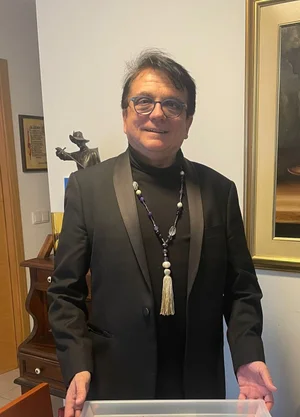
By Angel Antonio, Founding Director
For most of human history, no government asked permission before a plant or a fungus entered the body of a healer, a mystic, or a curious mind. Cannabis and psilocybin mushrooms are not inventions. Nobody synthesized them in a laboratory to chase a patent or a high. They grew, they were found, and they were used — for the body, for the spirit, and, yes, for pleasure — long before any nation-state existed to object. The twentieth century changed that. Two very different organisms, sharing almost nothing botanically or culturally, were swept into the same bureaucratic net for reasons that had far more to do with politics than with pharmacology. This is the story of how that happened, and why the most honest response to it is not case-by-case tolerance, but a simple, plain acknowledgment: nature cannot be prohibited. It can only be persecuted, badly, for a while.
The Architecture of Prohibition
The template was built in the United States, and it was built on alcohol first. When the Eighteenth Amendment failed and Prohibition collapsed in 1933, it left behind something more durable than the law itself: an enforcement bureaucracy that needed a new target to justify its existence. That target found its architect in Harry J. Anslinger, the first commissioner of the Federal Bureau of Narcotics, who held the post for an extraordinary thirty-two years, from 1930 to 1962 [1]. Anslinger initially dismissed the idea that cannabis was dangerous. Within a few years he had reversed course entirely, building a campaign that linked the plant to Mexican immigrants, Black jazz musicians, and the supposed corruption of American youth — a strategy that culminated in the Marijuana Tax Act of 1937 [1]. Historians today debate how much of this was calculated racism from day one versus an opportunistic pivot by a bureaucrat protecting his budget [1]. Either reading arrives at the same place: the prohibition of cannabis in America was never primarily a public-health decision.
That template went global in 1961, when the United Nations adopted the Single Convention on Narcotic Drugs, folding cannabis into the same international control regime as opium and coca [3]. Psilocybin itself would not be swept in until the 1971 Convention on Psychotropic Substances — a telling detail, since the mushrooms that produce it have never been under direct international control [4]. Only the molecule was outlawed; nature, once again, slipped through the letter of the law even as it was condemned in its spirit.
Then came the confession that removed all ambiguity about motive. In a 1994 interview later published in Harper's, John Ehrlichman, Richard Nixon's domestic policy chief, admitted that the 1971 War on Drugs was designed to criminalize two groups the administration considered its enemies: the antiwar left and Black Americans [2]. By associating hippies with marijuana and Black communities with heroin, he said, the government could raid, arrest, and discredit both — without ever making it illegal to hold the wrong politics or the wrong skin color [2]. Nixon compounded the cynicism by ignoring his own Shafer Commission, which had recommended decriminalizing cannabis, and instead placed it in Schedule I, the most restrictive category, specifically to choke off scientific research [5]. The war on these substances was never really about the substances.
Cannabis: From the Apothecary to Schedule I
Cannabis had been part of Western medicine for over a century before Anslinger — advertised in publications like Vanity Fair as early as 1862 [1] — before it was legislated out of the pharmacy entirely. It took until the 1960s for science to catch up with what herbalists already knew. Israeli chemist Raphael Mechoulam isolated THC in 1964 and went on to help identify the endocannabinoid system: a network of receptors, present in every mammal, that cannabis compounds happen to fit like a key [6]. It is one of modern pharmacology's stranger ironies that a plant humans criminalized in the twentieth century led directly to the discovery of a regulatory system inside our own bodies that we didn't know existed.
The clinical evidence since has been most convincing exactly where you'd expect a century of anecdote to eventually be vindicated: severe epilepsy syndromes like Dravet and Lennox-Gastaut, where cannabidiol-based treatment won FDA approval, and chronic pain, where the endocannabinoid system's role in pain signaling is well established even if guidelines remain cautious [7]. None of this required abandoning scientific rigor. It required, simply, permission to look.
Psilocybin: The Sacred Mushroom and the Science That Arrived Late
If cannabis's story is one of medicine interrupted, psilocybin's is one of discovery interrupted almost as soon as it began. In 1955, a Wall Street banker and amateur mycologist named R. Gordon Wasson traveled to the Sierra Mazateca in Oaxaca and took part in a velada — an all-night healing ceremony — led by the curandera María Sabina [8]. Wasson had reportedly promised her the encounter would stay private; instead, his 1957 Life magazine account, "Seeking the Magic Mushroom," detonated a wave of Western curiosity that sent hippies, seekers, and eventually the counterculture's biggest names to her village [8]. María Sabina later said the arrival of fame stripped the mushrooms of their purity. It is worth sitting with that discomfort rather than smoothing it over: the West's introduction to psilocybin came at the cost of the very tradition it claimed to admire.
A generation later, ethnobotanist Terence McKenna and his brother, pharmacologist Dennis McKenna, pushed the mushroom's significance further than most scientists were willing to follow, proposing in Food of the Gods (1992) that psilocybin ingestion by early hominids catalyzed the rapid expansion of the human brain — the so-called "Stoned Ape" hypothesis [9]. It remains speculative and contested; the fossil record doesn't cooperate as neatly as the theory needs it to [9]. But it is a serious provocation from serious minds, and newer paleoclimatic and epigenetic research has at least kept the door open rather than closing it [9].
The clinical renaissance has been carried, more than by any other single figure, by Rick Doblin, who founded the Multidisciplinary Association for Psychedelic Studies in 1986 in direct response to MDMA's scheduling, and who spent nearly four decades building the scientific case for psychedelic-assisted therapy [10]. In the UK, Amanda Feilding, who founded the Beckley Foundation in 1998 and partnered with Imperial College London's Robin Carhart-Harris, produced the brain-imaging research that gave the world its first real look at what psilocybin and LSD do to the default mode network — the neurological signature of ego dissolution [12]. Feilding passed away in May 2025, having lived to see the field she helped will into existence become respectable [12]. But respectability is not the same as arrival: in June 2024, an FDA advisory panel rejected MDMA-assisted therapy for PTSD despite MAPS's decades of work, citing concerns about trial data, and the affiliated company laid off three-quarters of its staff soon after [11]. The renaissance is real. It is not yet won.
The Sacred in the Amazon and the Andes
Long before any of this Western rediscovery, ayahuasca — known as yajé among Colombia's Tukano and Inga peoples — was already doing the work that psychedelic science now studies in fMRI machines: dissolving the boundary between self and cosmos as a matter of daily spiritual practice, not clinical intervention. Among the Tukano of the Colombian Amazon, the yajé ritual is understood as a return to the moment of Creation itself, organizing an entire ecological cosmology around the shaman's visions. The Inga, in the Sibundoy Valley of Putumayo, hold a parallel tradition — one of the richest concentrations of medicinal and visionary plants ever documented, according to the ethnobotanist Richard Evans Schultes, who spent decades cataloguing it [14].
I know this world not only through research but through direct contact. I've spent time with the Tikuna community of San Martín de Amacayacu, deep in the Colombian Amazon, where traditional medicine is a living, transmitted body of knowledge — passed grandmother to grandchild, healer to apprentice — organized around plants distinct from yajé, but rooted in the same conviction: that the natural world offers not just remedy, but relationship. A shaman there spoke to me at length about yajé itself, even though it is not, to my knowledge, central to Tikuna tradition specifically. What struck me was not the specifics of any one plant, but the consistency of the worldview across peoples who have never coordinated with each other: nature heals because nature is not separate from spirit.
It is worth noting that even the country most associated with the War on Drugs has, in narrow but real ways, recognized the limits of prohibition when it collides with genuine religious practice. In 2006, the U.S. Supreme Court ruled unanimously in Gonzales v. O Centro Espírita Beneficente União do Vegetal that a Brazilian-founded church had the right to import and consume DMT-containing ayahuasca tea as a sacrament, under the Religious Freedom Restoration Act [15]. Santo Daime, a related syncretic church, won similar protection in 2009 [15]. If the American legal system itself has conceded that some plant sacraments cannot be prohibited without violating a deeper freedom, that concession deserves to be taken seriously rather than treated as a legal footnote.
Carlos Castañeda: The Myth That Opened a Door
No honest account of how the West came to imagine indigenous shamanism can skip Carlos Castañeda, whose Teachings of Don Juan (1968) introduced millions of readers — including John Lennon, Joni Mitchell, and George Lucas — to a Yaqui sorcerer named Don Juan Matus and his psychoactive apprenticeship [13]. It also has to include what happened next: a 1973 Time investigation found the biographical details fabricated, no evidence of Don Juan or his lineage has ever surfaced, and UCLA's anthropology department, which had awarded Castañeda advanced degrees on the strength of these books, quietly stopped defending their scholarly standing [13]. His work is best understood today not as ethnography but as myth-making — enormously influential myth-making, which shaped how an entire generation pictured the shaman archetype, but myth all the same. Citing his cultural impact is fair. Citing him as a source of fact about indigenous practice is not.
The Present: Decriminalize Nature and the Question of What Comes Next
The most coherent contemporary answer to a century of prohibition did not come from Washington or the United Nations. It came from Oakland, California, where Carlos Plazola and Larry Norris founded Decriminalize Nature in 2018, leading a unanimous city council vote in June 2019 to deprioritize enforcement against natural entheogens — psilocybin, mescaline, ibogaine [16]. Plazola's framing is precise and deliberate: decriminalization is not legalization. It does not create a commercial market, a license, or a prescription pad. It simply stops treating personal use, cultivation, and sharing as a police matter [16]. Legalization, by contrast, would build out the regulatory and commercial apparatus — and Plazola, who had earlier lobbied for cannabis legalization in California, has been explicit that his movement wants to avoid repeating cannabis's mistake: creating artificial scarcity and corporate capture in the name of safety [16].
The distinction matters because it is also, not coincidentally, a distinction between the synthetic and the natural. Decriminalize Nature has consistently drawn its line around plants and fungi that anyone can grow, harvest, and share — precisely because no corporation can patent a mushroom that grows wild in a cow pasture [16]. Oakland's model has since propagated to Denver, Santa Cruz, Ann Arbor, Washington D.C., and Seattle, and served as the direct precedent for Oregon's Measure 109 and Colorado's Proposition 122 — the first two U.S. states to build regulated, licensed frameworks for supervised psilocybin therapy [17]. It is not a frictionless story: Decriminalize Nature has faced real, warranted criticism from Indigenous communities, including the National Council of Native American Churches, over its early inclusion of peyote — a plant sacred to and already scarce for the communities that depend on it — without adequate consultation [18]. A movement built on respecting nature has to extend that respect to the people who have protected these traditions the longest.
Three Wings, One Future Industry
The mistake would be to treat any of this — the medicinal, the spiritual, or the recreational — as the only legitimate wing worth defending. Pharmaceutical companies will keep pursuing patents on cannabinoid and psilocybin derivatives, and that is fine; medicine should follow evidence wherever it leads. But an argument that stops there quietly concedes the rest of the field to the same prohibitionist logic it claims to reject — accepting that these plants and fungi are legitimate only once a corporation has repackaged them into something patentable and prescription-only.
The fuller argument is this: the medicinal wing, the spiritual and ceremonial wing, and the responsible adult recreational wing all deserve to become legitimate, recognized, and properly regulated activities and industries — not tolerated by judicial exception, as with Santo Daime and the UDV, and not left to the patchwork of municipal resolutions that Decriminalize Nature has had to build one city at a time. Oregon and Colorado are the clearest laboratories the United States has for what serious regulation looks like; Latin America, with its far deeper and more continuous traditions of plant medicine, has both more to protect and more to gain by getting ahead of this transition rather than importing it a decade late, as it so often has with other regulatory shifts. The European Union is beginning to have its own version of this debate, but this is, first and foremost, an American and Latin American story, because that is where prohibition was built, and that is where it will have to be dismantled.
A century ago, a bureaucrat looking for a mission and a president looking for enemies decided that a plant and a mushroom were the problem. They were never the problem. The problem was a system that could not tell the difference between controlling a substance and controlling the people who used it. Nature does not ask for permission. It has always known what it was for. The question, finally, is whether the law is ready to know it too.
References
[1] "Harry J. Anslinger," Wikipedia; "The man behind the marijuana ban for all the wrong reasons," CBS News (2016); "Harry Anslinger & the Federal Bureau of Narcotics," historyofcannabis.org (2026).
[2] Dan Baum, "Legalize It All," Harper's Magazine (2016), reporting a 1994 interview with John Ehrlichman; coverage via Vice and the American Enterprise Institute.
[3] "United Nations Conference for the Adoption of a Single Convention on Narcotic Drugs," United Nations (un.org); "Single Convention on Narcotic Drugs," Wikipedia.
[4] Måns Bergkvist et al., "Fear and Loathing in the United Nations: The Establishment of International Control of Psychedelics Through the 1971 Convention on Psychotropic Substances," 2026.
[5] Peter Grinspoon, "Nixon's Cannabis Hypocrisy," Substack.
[6] "The Discovery of the Endocannabinoid System: Centuries in the Making," NeuroscienceNews / ILAE.
[7] Ibid.; "Medical Cannabis: Understanding the Current Evidence," Curaleaf Clinic.
[8] "María Sabina," Wikipedia; "What Made María Sabina Unique," DoubleBlind Mag (2022); "This Mexican Medicine Woman Hipped America to Magic Mushrooms," Medium/Timeline (2017).
[9] "Stoned Ape Theory," Wikipedia; "The Stoned Ape Hypothesis: What the Evidence Actually Shows," mckenna.academy (2026).
[10] "Rick Doblin," Wikipedia; "MAPS Celebrates 40 Years at a Defining Moment for Psychedelics," MAPS.org (2026).
[11] "Rick Doblin," Wikipedia (FDA advisory panel decision, June 2024, and Lykos Therapeutics restructuring).
[12] "Remembering Beckley Foundation Founder, Amanda Feilding (1943–2025)," MAPS.org (2025); "Amanda Feilding," Beckley Foundation.
[13] "The Teachings of Don Juan," Wikipedia; "Carlos Castaneda faked an anthropology classic, then built a cult," Boing Boing (2026).
[14] "Inga," Organización Nacional Indígena de Colombia (ONIC); "View from the Far Side," mckenna.academy, on Richard Evans Schultes and the Sibundoy Valley.
[15] Gonzales v. O Centro Espírita Beneficente União do Vegetal, 546 U.S. 418 (2006), case summary; "Santo Daime Wins Court Decision," Erowid.org.
[16] "Decriminalize Nature Co-Founder Wants to Free Entheogens Everywhere," Psychedelic Spotlight (2024); "Oakland Takes Step Toward Decriminalizing Psychedelic Mushrooms," KQED; "Two Years After Oakland's Psychedelic Decrim, What's Been the Impact?," Filter (2021).
[17] "The Differences Between Colorado and Oregon's Psilocybin Laws," HealingMaps.com (2026).
[18] "Decriminalize Nature Promotes New Oakland Initiative While Condemning Fellow Activists," Lucid News (2020).