Fear Replaced Faith
Fear Replaced Faith
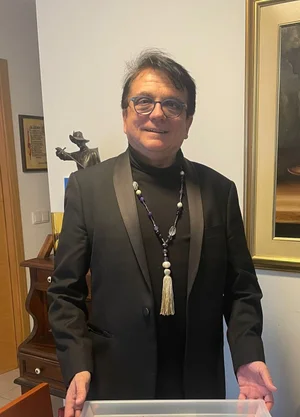
Building a family wasn’t easy for me. The circumstances weren’t in my favor, and for years the path to fatherhood seemed more closed than open. I could have let it go — many people in similar circumstances do, and no one would have judged them for it. But I held onto it as a priority, against the current, until I was able to adopt my son. Today he is the reason and the purpose of my life.
I share this not to talk about myself, but because it raises an uncomfortable question every time I look around: if I, with the harder path, found in fatherhood a non-negotiable purpose, why are so many people with a far easier path walking away from it? Why are so many also walking away from founding a business, from betting on an uncertain future, from committing to something bigger than themselves?
Freedom Won
In 1945, the defeat of the Axis didn’t just redraw borders and rebuild economies. It freed millions of people who had lived under totalitarian regimes to do something they had gone a generation without being able to do: ask themselves who they were, without the state answering for them. Germany, Italy, and Japan didn’t just grow prosperous under the new liberal order led by the United States — they became societies where the individual could, for the first time in years, dissent, believe, create, and make mistakes without that meaning prison or worse.
Something similar happened again in 1989. The fall of the Berlin Wall wasn’t just a geopolitical event — it freed millions of people from a state machinery that had colonized even private life. From there, with the United States consolidated as the world’s leading power and a global economy increasingly built on open markets, globalization seemed like an unstoppable phenomenon. And those generations, freed from totalitarianism, responded with something very concrete: they rebuilt, they founded families, they founded businesses, they founded international institutions meant to last.
They responded, in a word, with faith.
The Sixty-Year Arc
And yet, something changed. In 1960, the average woman in the world had five children. Today, more than half of the world’s countries — home to two-thirds of the global population — are below the generational replacement level. The most extreme cases aren’t poor or unstable countries: they are, precisely, the ones postwar freedom made most prosperous. South Korea, at 0.75 children per woman, now has the lowest fertility rate in the entire OECD. Japan recorded its lowest number of births since records began, in 1899, back in 2024. France — a historic symbol of Western modernity — had more deaths than births in 2025 for the first time since the end of World War II.
The same curve repeats in other areas. Entrepreneurial drive has slowed across much of the world’s wealthiest economies. And faith in globalization, which seemed irreversible just a decade ago, has given way to a forceful return of nationalism and isolationism — especially in the United States, under Donald Trump: free trade agreements curtailed or dismantled, American leadership in international institutions called into question.
Three curves — demographics, economic initiative, openness to the world — moving together, in the same direction, not by coincidence.
Fear Replaced Faith
Here, I think, is the underlying explanation. The freedom that postwar liberal democracy gave us requires, to be fully exercised, an act of faith: betting on a child, on a business, on a long-term commitment, trusting that tomorrow will sustain that bet. That’s exactly what the generations of 1945 and 1989 did. Freed from totalitarianism, they didn’t hesitate — they built.
Sixty years later, that same freedom — no longer scarce, no longer newly won, but inherited and taken for granted — stopped being accompanied by that faith. Fear replaced it: fear that the future won’t sustain what’s started today, fear of committing to something that can’t later be undone, fear that tomorrow’s world will be worse than today’s. And fear, unlike faith, doesn’t build — it preserves. It doesn’t found families. It doesn’t risk capital on a new idea. It doesn’t bet on opening up to the neighbor, the foreigner, or the future. It simply protects what it already has.
That’s ultimately the same logic behind the resurgence of nationalism and isolationism we see today across much of the West: it isn’t an entirely new ideology, it’s collective fear with a flag. And in societies that have lost that faith, no real external threat is even needed to feel threatened — it’s enough to have stopped believing in one’s own project of freedom for any change, any difference, any opening to start feeling like a risk instead of an opportunity.
The Newest Uncharted Territory
If there’s a perfect mirror of this fork between fear and faith, it’s artificial intelligence. Facing it, the world is dividing almost exactly along the same two responses we’ve seen again and again throughout this story. For many, AI is the ultimate threat: the job that disappears, the meaning that dissolves, the control that slips away in the face of a technology that isn’t fully understood. It’s the same old fear, wearing a new name — protect what’s known, resist what can’t be fully predicted.
For others, that same uncertainty is the biggest opportunity in a generation: a tool capable of multiplying what an individual, a company, or an entire region can build, learn, and achieve. Not because they ignore the risk — they take it seriously — but because, like the generations of 1945 and 1989, they choose to bet on the future instead of digging in against it.
The difference between the two responses isn’t the technology itself. It’s, once again, whether it’s viewed with faith or with fear.
A New Faith, Fit for This Moment
And here is where I want to dream big, because history doesn’t end at the diagnosis. Every time humanity has faced truly uncharted territory — the postwar years, the fall of a wall, now an intelligence we’re only beginning to understand — the question was never whether fear had its reasons. It almost always does. The question was, and still is, whether enough people, one by one, decided to bet anyway.
That decision doesn’t depend on a government or an international treaty. It depends on every person who chooses, today, to have that child, to found that business, to learn to use that new tool instead of fearing it, to open up to the neighbor instead of shutting the door. None of those decisions, taken alone, changes the world. But the story we’ve just traced proves exactly the opposite at scale: entire societies were transformed when millions of people, nearly at once, chose faith over fear. That wasn’t a collective accident — it was the sum of individual decisions, each one as small and as personal as mine was when I decided to become a father against every reasonable odd.
That’s the world worth imagining now: one where artificial intelligence is faced not with trembling hands but with hands busy building; where having children again, founding again, opening up to one another again, stops feeling like an unnecessary risk and goes back to feeling like what it always was — the most human way of saying the future is still worth the bet. No great renaissance in history began with a collective decision. It began with thousands of people, each on their own, making the same small, quiet decision I once made: choosing faith, precisely when fear seemed like the more reasonable choice.
Faith as a Decision, Not a Circumstance
I come back to where I started. I didn’t have the easy path. Biology wasn’t on my side, and neither were the circumstances, and there were moments when the reasonable response — the response of fear — would have been to let it go. I didn’t. I chose faith, exactly when fear would have been the more comfortable, more justifiable option.
That convinces me of something no statistic can prove, but life itself can: faith doesn’t show up when the path is easy. It shows up when someone actively decides that something is worth more than the comfort of not committing. The societies that today have almost everything handed to them — security, prosperity, freedom inherited rather than won — aren’t the ones least capable of betting on the future again. They’re the ones least practicing that decision.
Freedom hasn’t failed. What’s missing is, once again, the faith to use it — to found, to commit, to believe it’s worth building something that outlasts you. That faith doesn’t depend on circumstances improving. It depends, as I had to learn, on deciding to hold onto it even when they don’t.
At GELAN, we keep exploring these questions — about freedom, purpose, and what it means to be human in a world changing faster than we can process — in Beyond the Algorithm. If this reflection touched something in you, I invite you to keep the conversation going at gelan.org.